 bbrihuang
Highlights
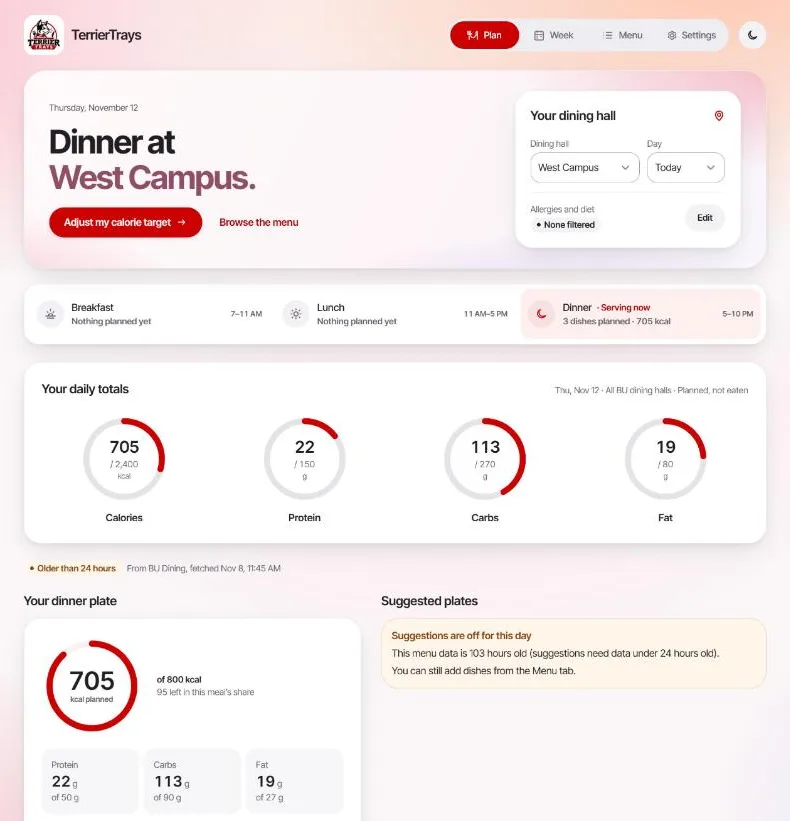
Came up with TerrierTrays, designed its front end and built the web app in React, Tailwind and Vite, so students can plan a day of BU dining-hall meals in one place instead of clicking between menus, items and days.
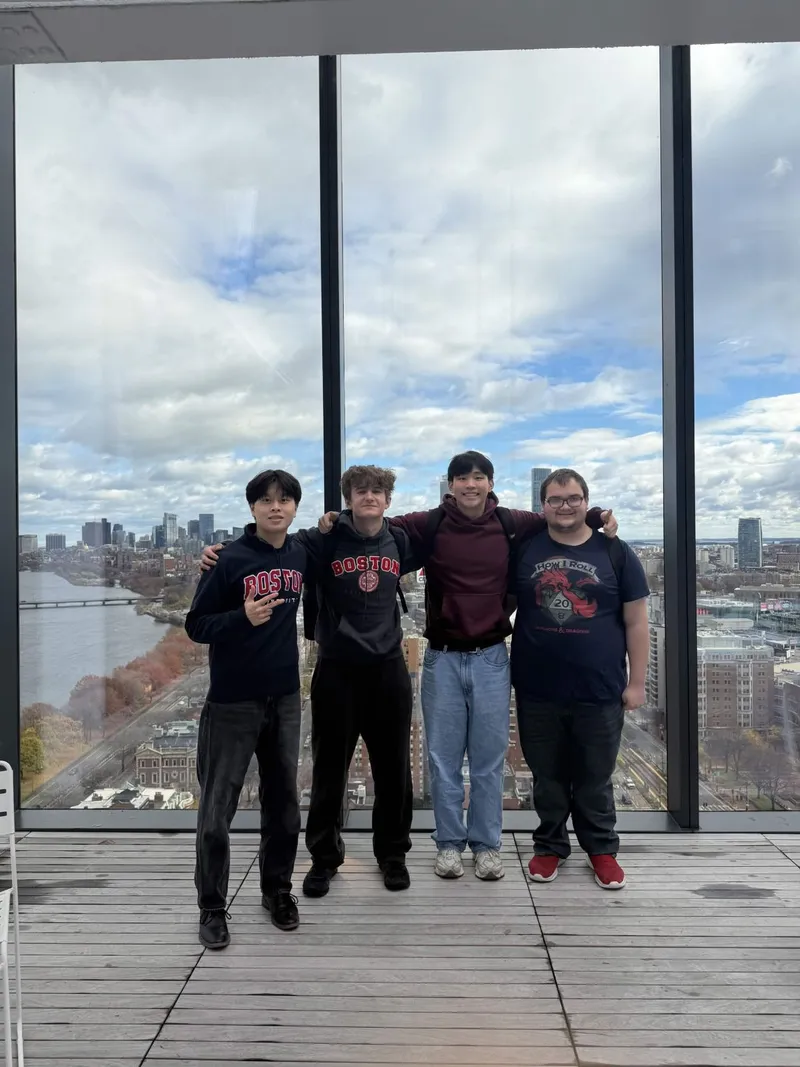
Placed 2nd in the Information Access track at Hackcessability 2026 with a team of four, by making open dining data easy to find, understand and act on.
Built the app to label menus older than 24 hours and pause suggestions, and to treat dishes with no allergen list as unknown, so it never plans from stale food or reads an empty list as safe.
Wired the team’s calorie model into a review step, so students see the estimate and tap Apply before any target changes.
The problem
BU Dining publishes menus, nutrition and allergens, but on a slow site. Planning meals to a calorie or macro target means clicking between menus, items and days. Hackcessability is run by Kappa Theta Pi Lambda Chapter, the BU Cybersecurity Association and CDS Student Government. The Information Access track asks teams to use open data to make hidden or complex information easier to find, understand or act on. The team also did the cybersecurity subtrack.
How it works
- 01
Scraper
Python, daily at 5:30 am New York time
- 02
Freshness check
Validates the data in GitHub Actions
- 03
menu-data branch
JSON per hall, per day
- 04
Site build
Pulls the data in on Vercel
- 05
React app
Plans in the browser
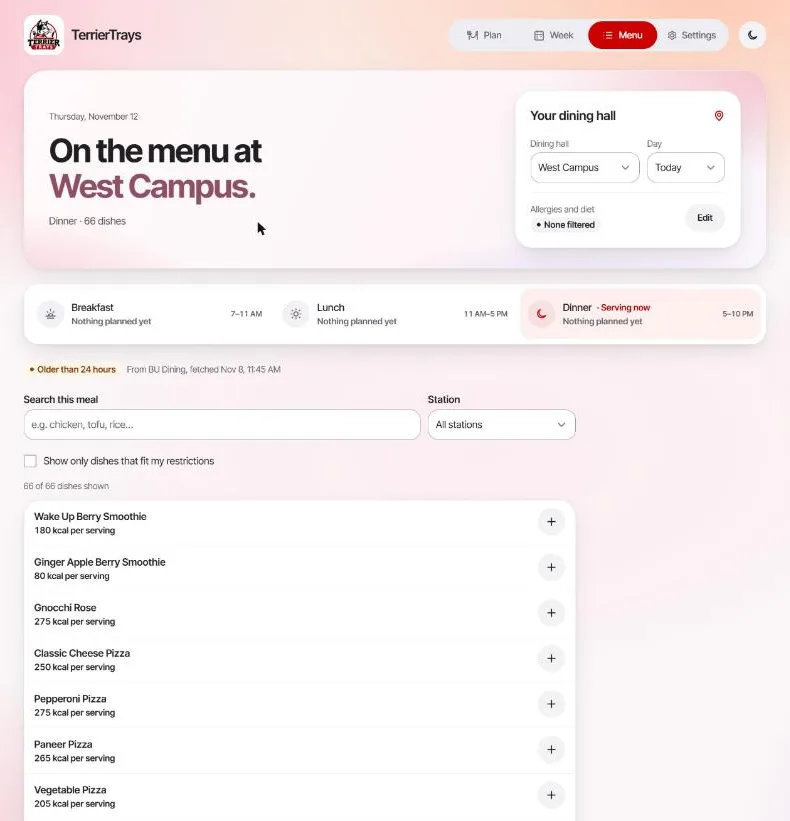
The app reads real menus for West Campus, Warren Towers and Marciano Commons up to a week ahead, meal by meal with hours. For the current meal it suggests up to three plates in whole dining-hall servings against a daily calorie target. “Not this” swaps a dish and “Why this plan?” explains the choice. You can also build your own plate from the Menu tab. Daily totals across halls show as four rings, and the Week tab plans seven days at one hall. Filters cover allergens and vegetarian, vegan, halal and gluten-free. It runs in the browser with no account and no tracking, and the measurements behind the calorie estimate are never saved or sent.
Who did what
I came up with the idea, designed the front end (UI and UX), brought everything together in React, Tailwind and Vite, and shipped the site on Vercel. Aladin Crnolic wrote the Python scraper for BU Dining menu, nutrition and allergen data, and automated the daily updates and freshness checks with GitHub Actions. Adrian Miller built the linear regression calorie model and the data cleaning. Erik Wang helped build the website.
Challenges
Allergens BU doesn’t list
BU leaves the allergen list empty for many dishes. Allergens are known for only 46% to 60% of items per hall. So an empty list never means allergen-free, and when a filter is on, dishes with unknown allergens are left out of suggestions.
Menus that go stale
A plan built on old data is worse than no plan. The scraper checks freshness before it publishes. If the menus are over 24 hours old, the app labels them as old and pauses suggestions instead of planning from stale food.
A model that only looks good on training data
The calorie model is a linear regression on age, gender, height, weight and activity level, and it is typically off by about 111 kcal. The team hit data leakage and overfitting along the way, and learned that a high R² on training data doesn’t make a model reliable. So validation came before training score. The model refuses inputs outside its training range, and you review the number and tap Apply before anything changes.
Accessibility
The goal was WCAG 2.2 AA: 44 px touch targets, keyboard and screen-reader paths, and reduced motion.
Where it stands
It is live and works for West Campus, Warren Towers and Marciano Commons. Fenway and Granby are not included yet. Next ideas are logins, hall picks that know your class schedule, and dining dollars.