bbrihuang
Highlights
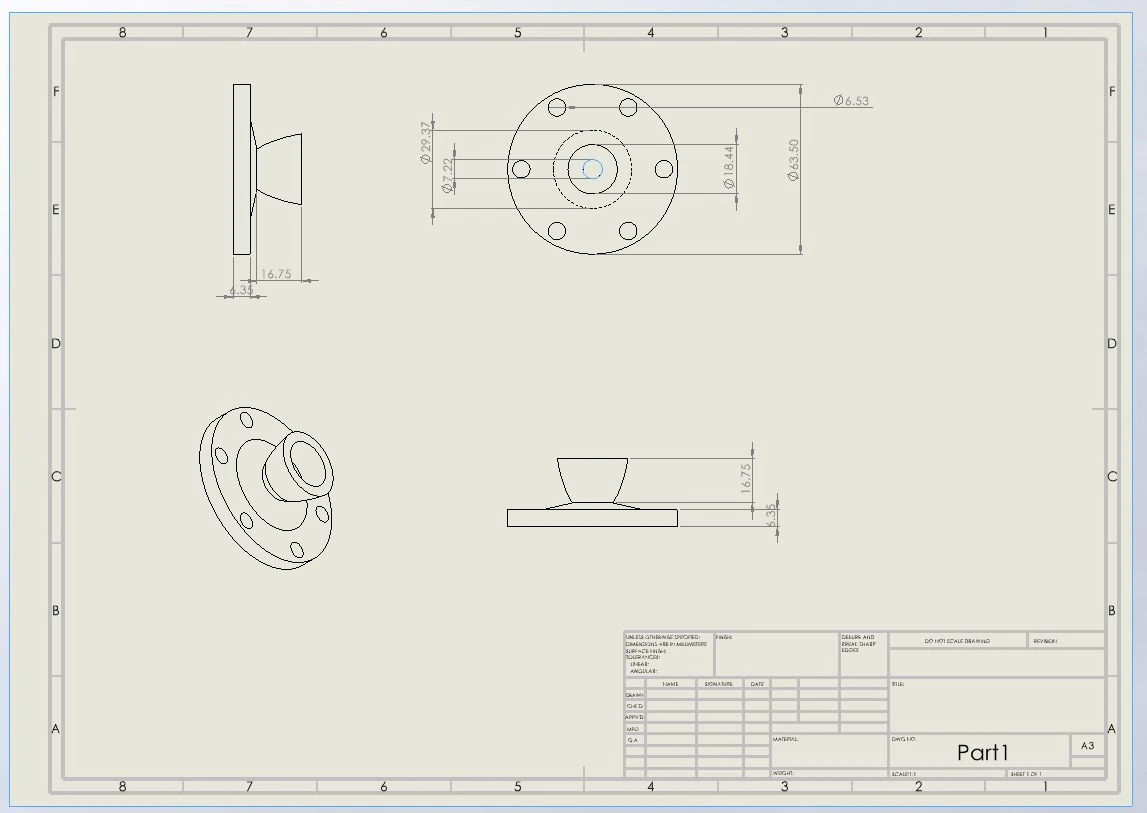
Sized a de Laval nozzle from the chamber conditions: 7.22 mm throat, 18.45 mm exit, area ratio 6.52.
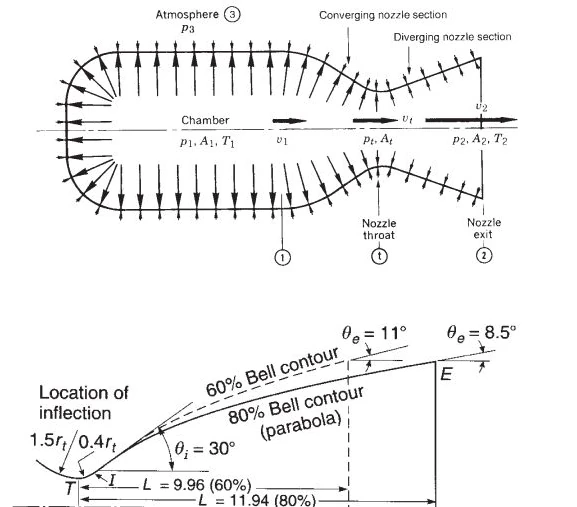
Chose an 80% bell over a cone and a 100% bell for near-maximum thrust efficiency at much lower length and weight.
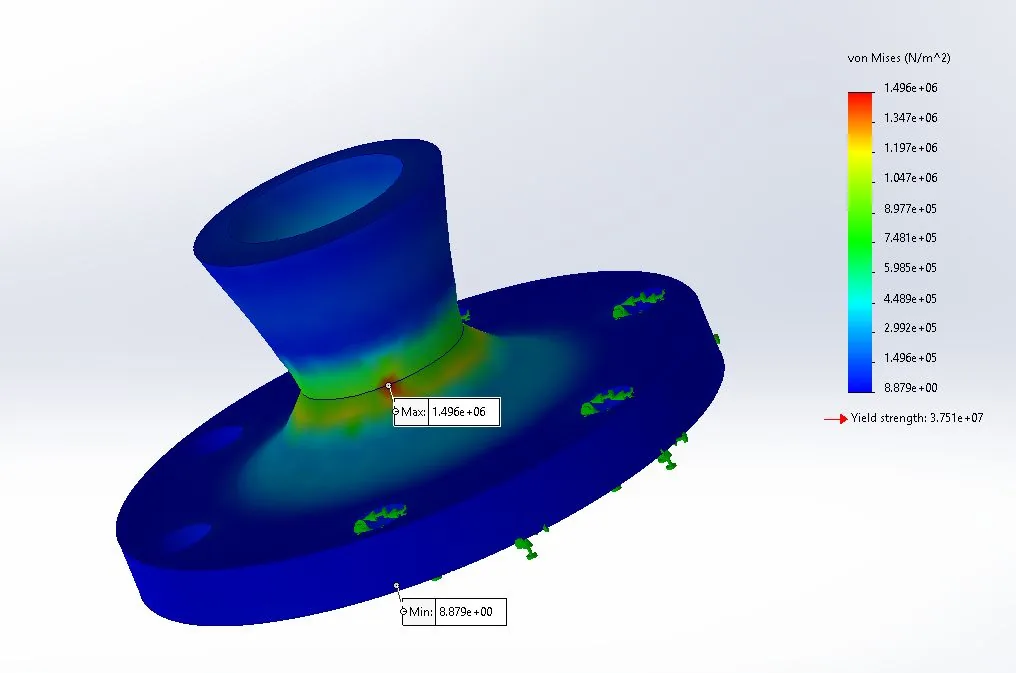
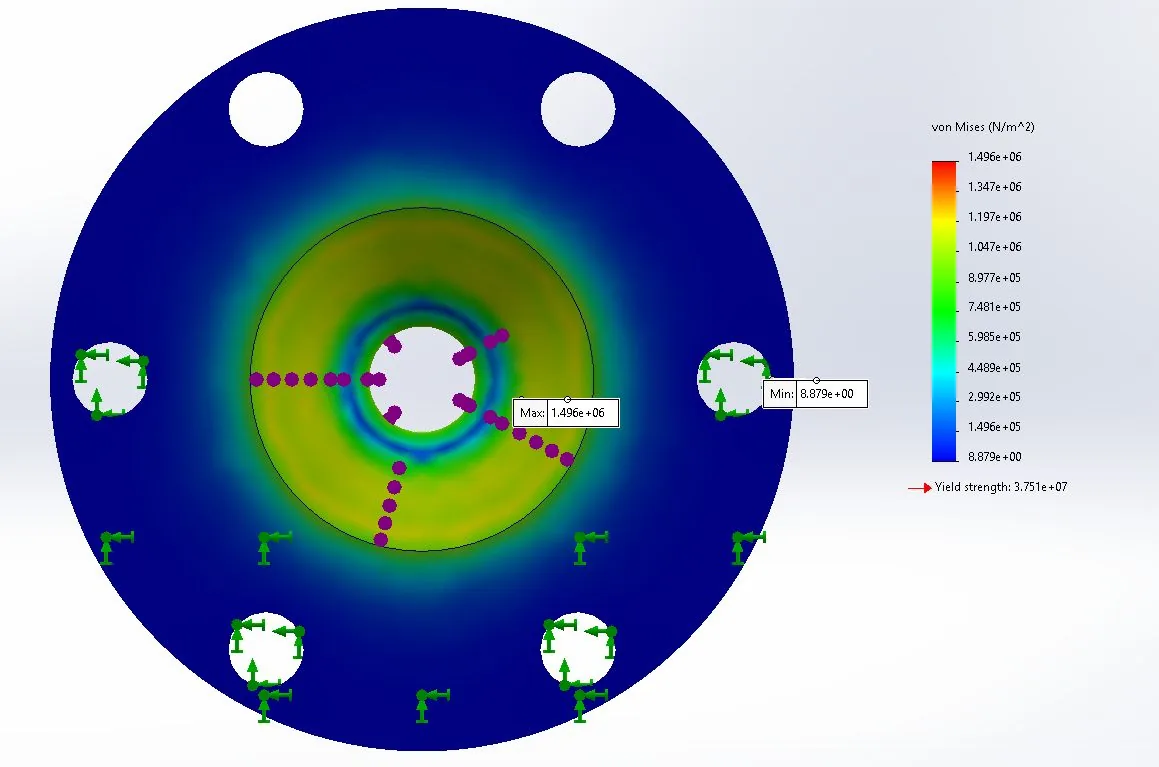
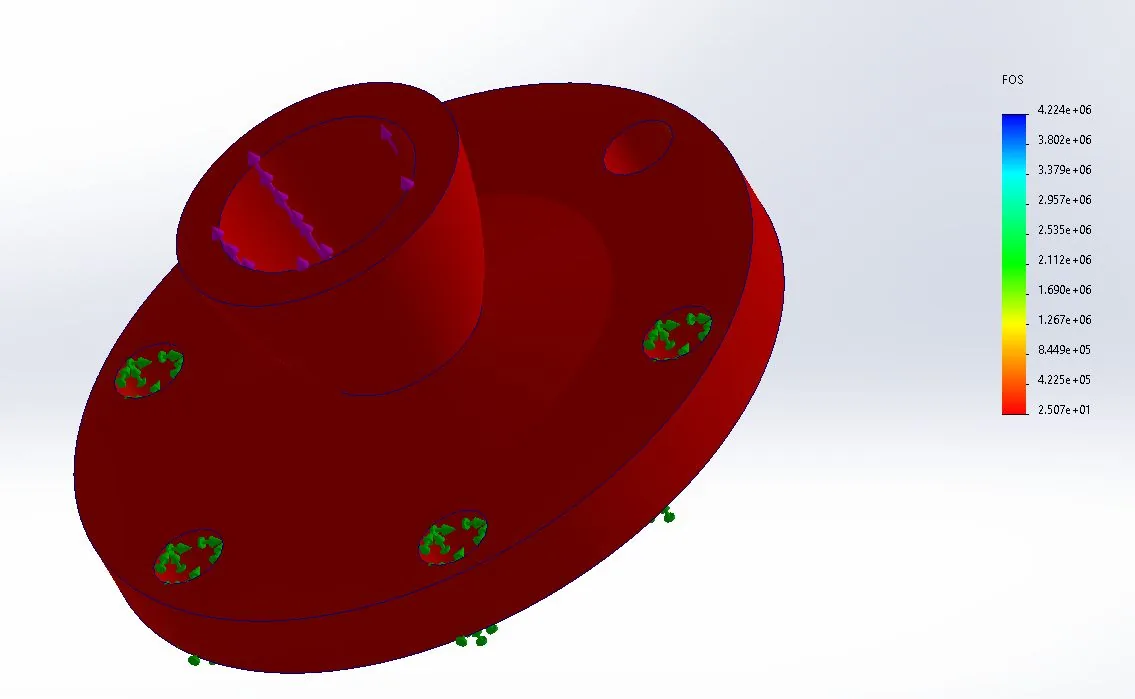
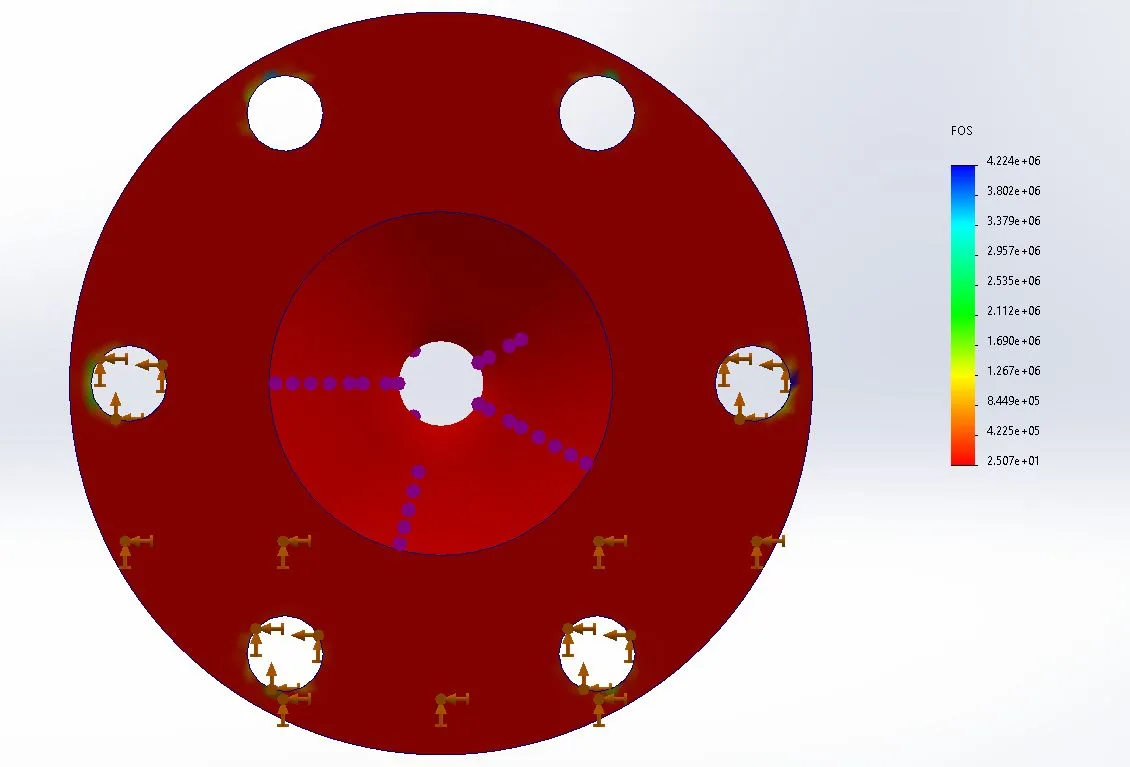
Ran FEA in SOLIDWORKS Simulation: peak von Mises stress of about 1.5 MPa against a 37.5 MPa yield strength, minimum factor of safety about 25.
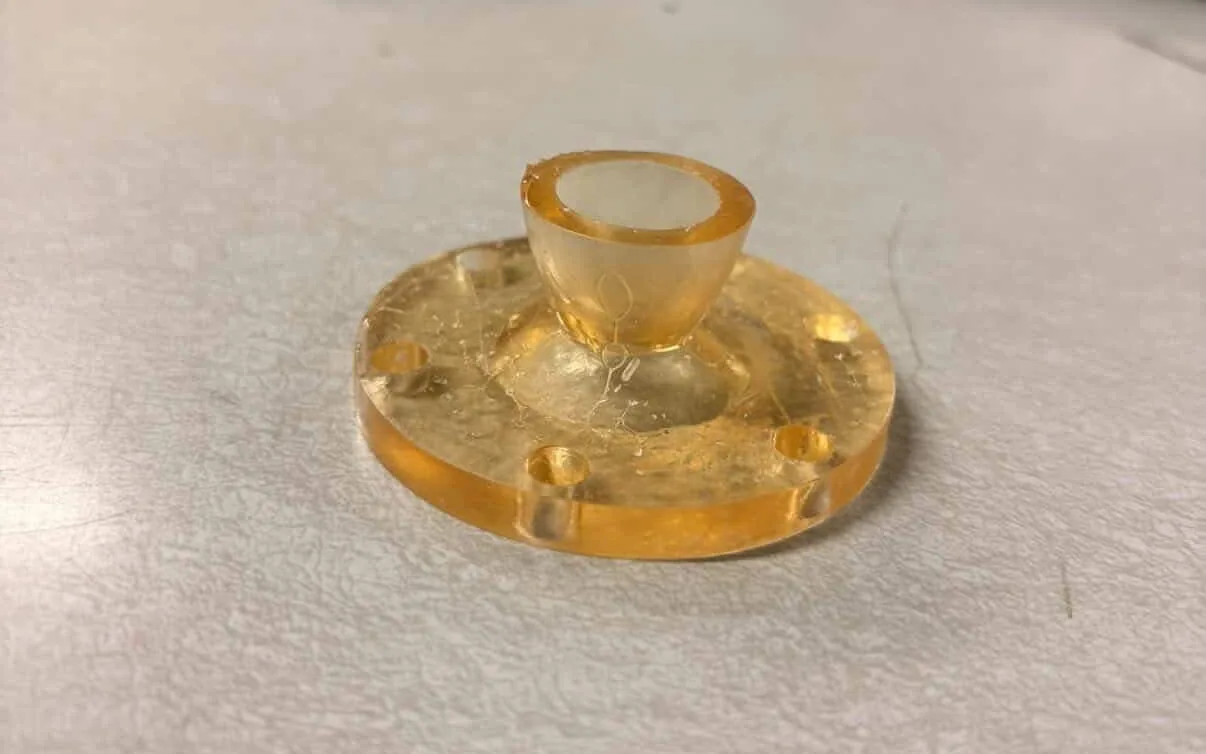
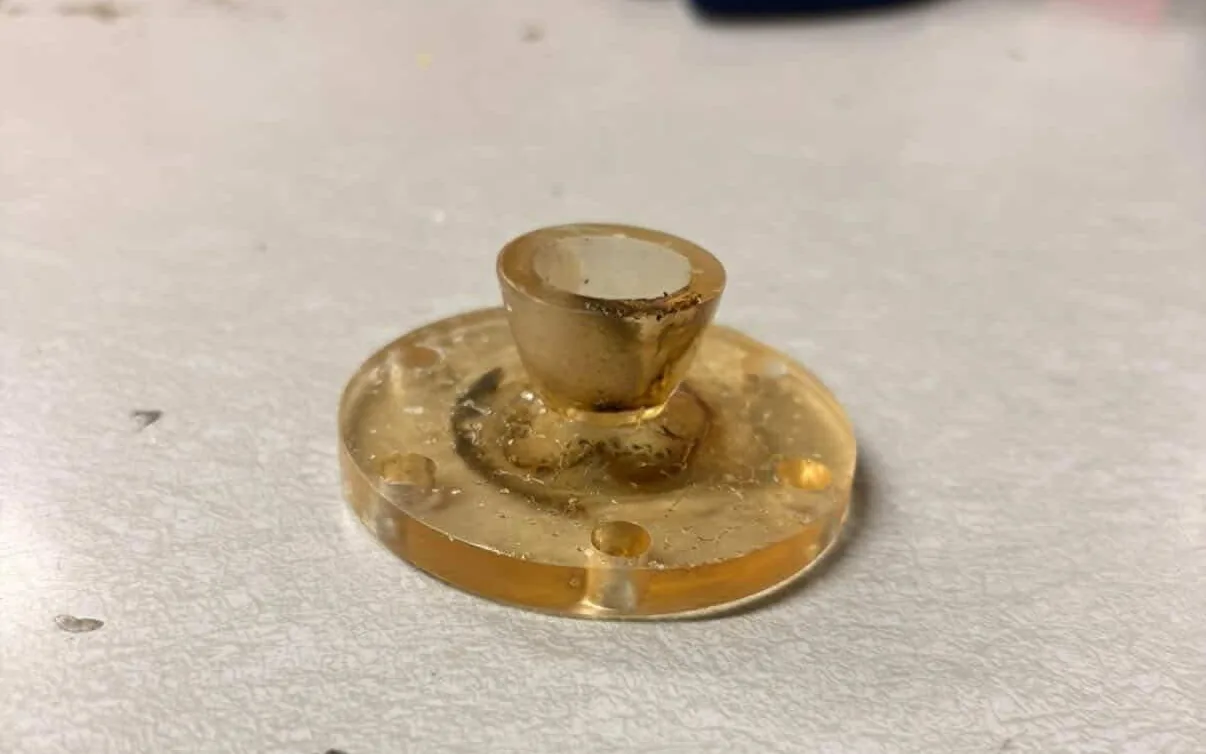
3D printed the nozzle in ABS-type resin and hot-fire tested it.
Overview
I designed, analyzed, printed and hot-fire tested a converging–diverging (de Laval) nozzle for a small hybrid rocket motor. This was BURPG’s intro project, done with Jacob Knight and Hikaru Uribe, and we presented the Critical Design Review on March 4, 2026.
Design inputs
Calculations
Nozzle shape decision
I compared a cone, a 100% bell and an 80% bell. A cone’s sharper angle sends the exhaust out wider, and only the velocity along the nozzle’s axis makes thrust, so it gives less axial thrust. A 100% bell is theoretically best but slightly longer and heavier.
I chose the 80% bell. Its exhaust isn’t quite as aligned with the axis as the 100% bell’s, but it gets near-maximum thrust efficiency at much lower length and weight, and that saving is worth more than the small loss in velocity.
CAD
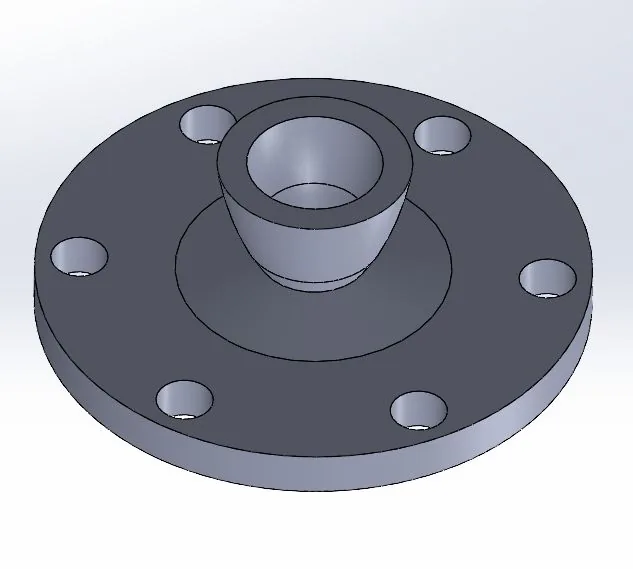
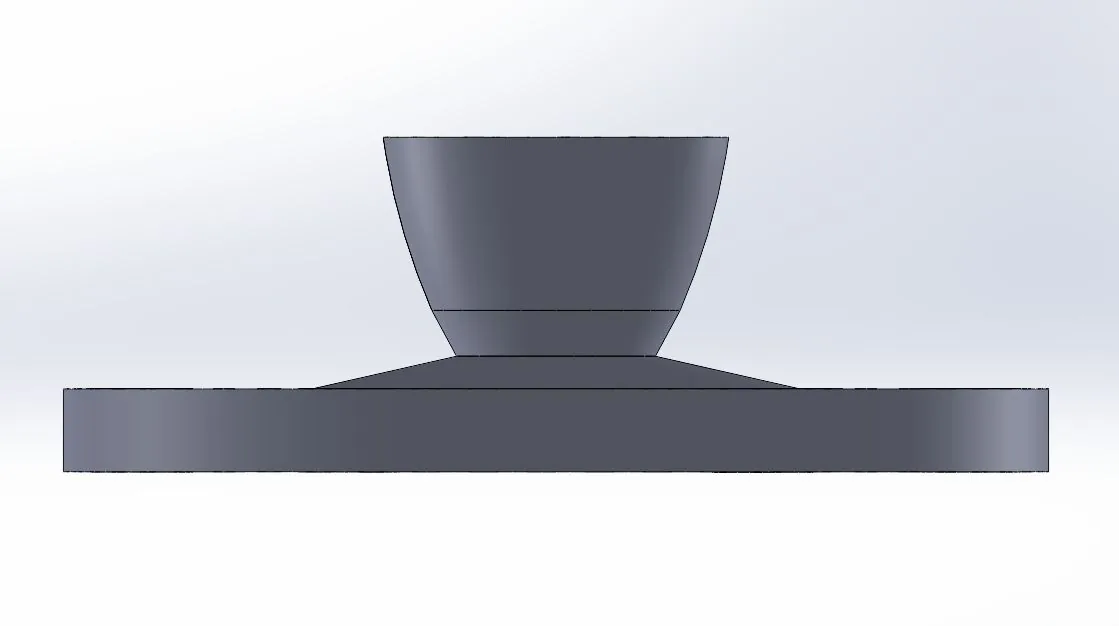
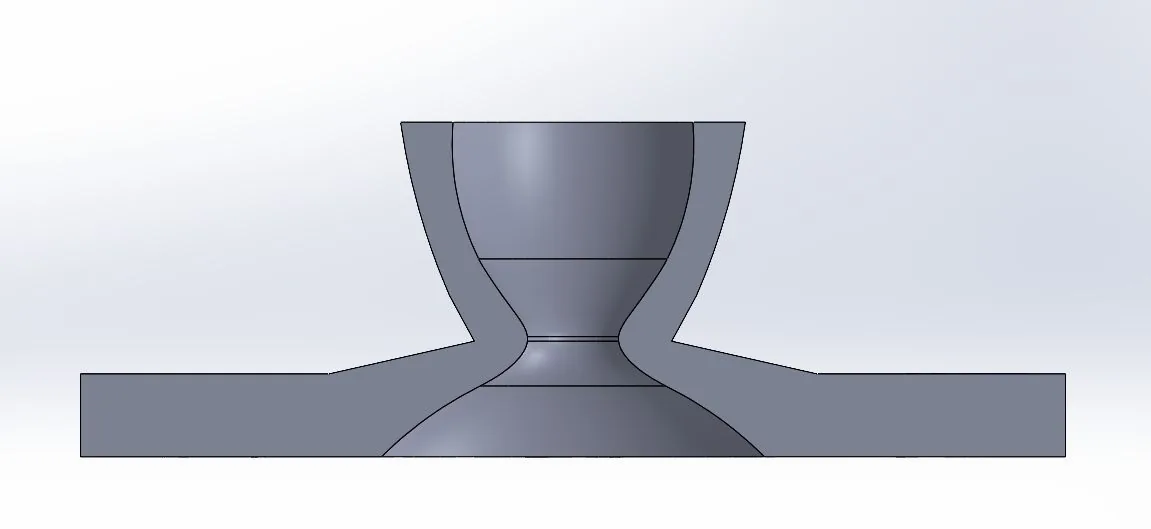
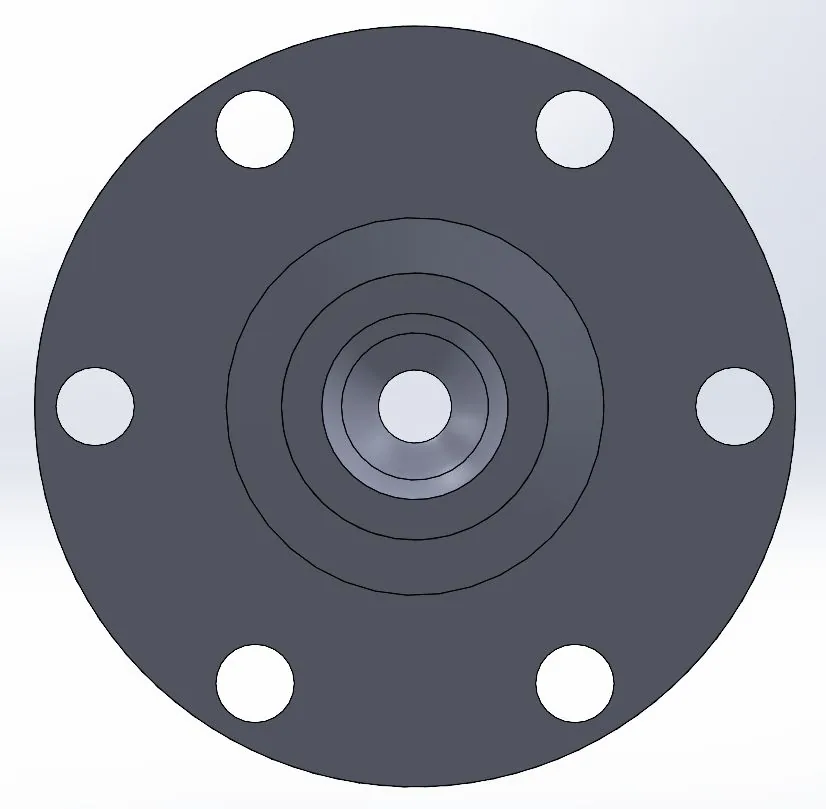
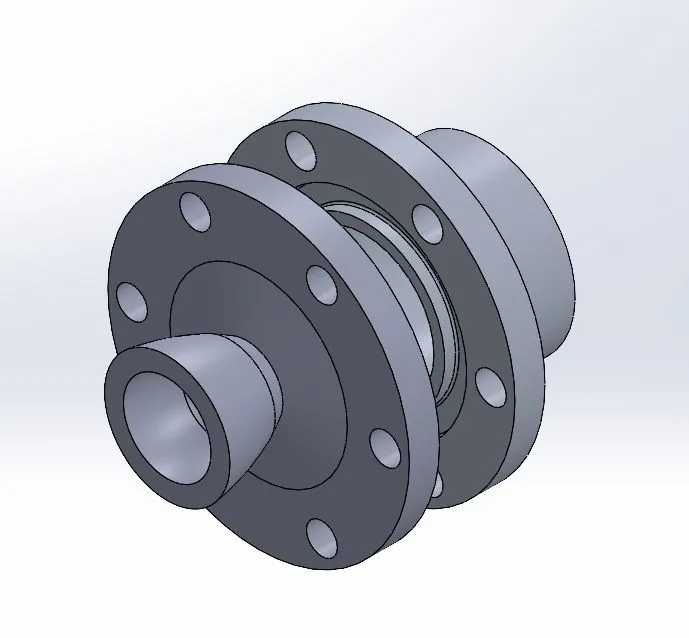
Modeled in SOLIDWORKS: the nozzle sits on a flange with six bolt holes, shown below from several views, exploded, and as the dimensioned drawing.
Simulation
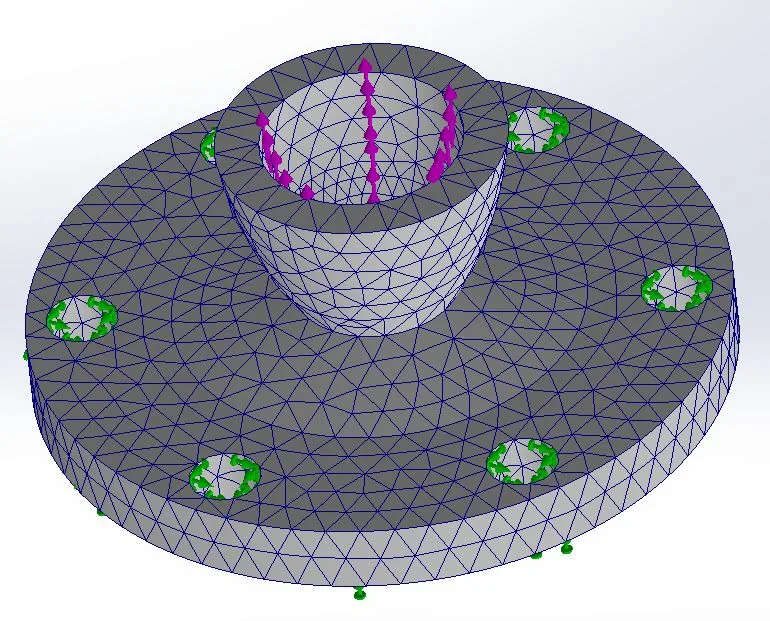
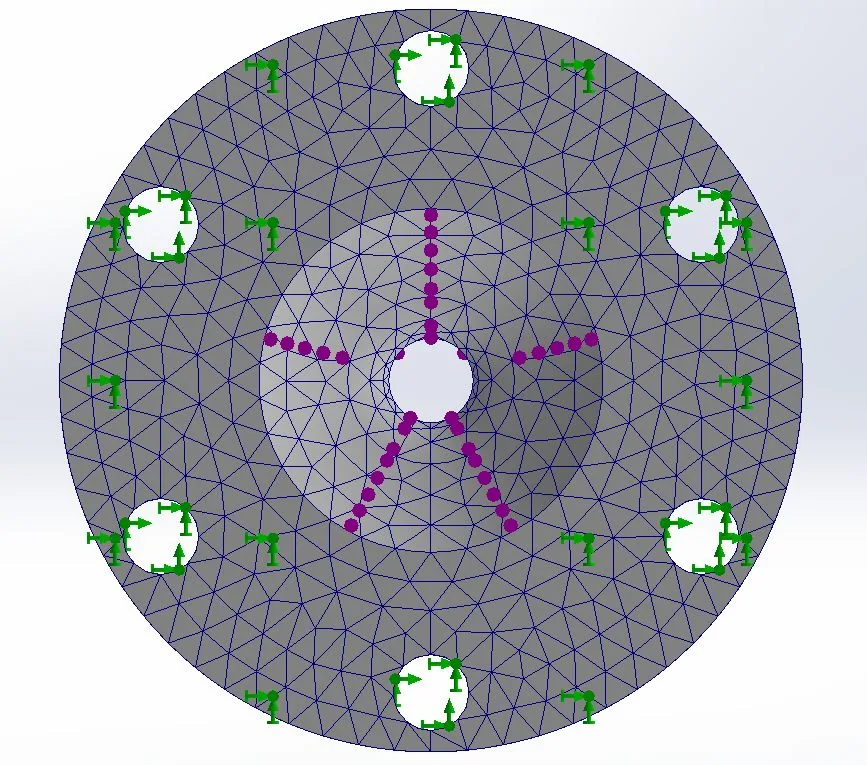
I ran a static FEA in SOLIDWORKS Simulation. The part is ABS resin with a tetrahedral mesh, a pressure load on the internal surface, and the flange bolt holes held fixed. Stress peaks at the throat/nozzle fillet, still far below yield.
Build and test
The nozzle was 3D printed in ABS-type resin and hot-fire tested. Photos of the printed part and two hot-fire clips are below.